From WDC Frankfurt RheinMain 2026 to Tainan: Felix Kosok and ICID Explore City Design Power
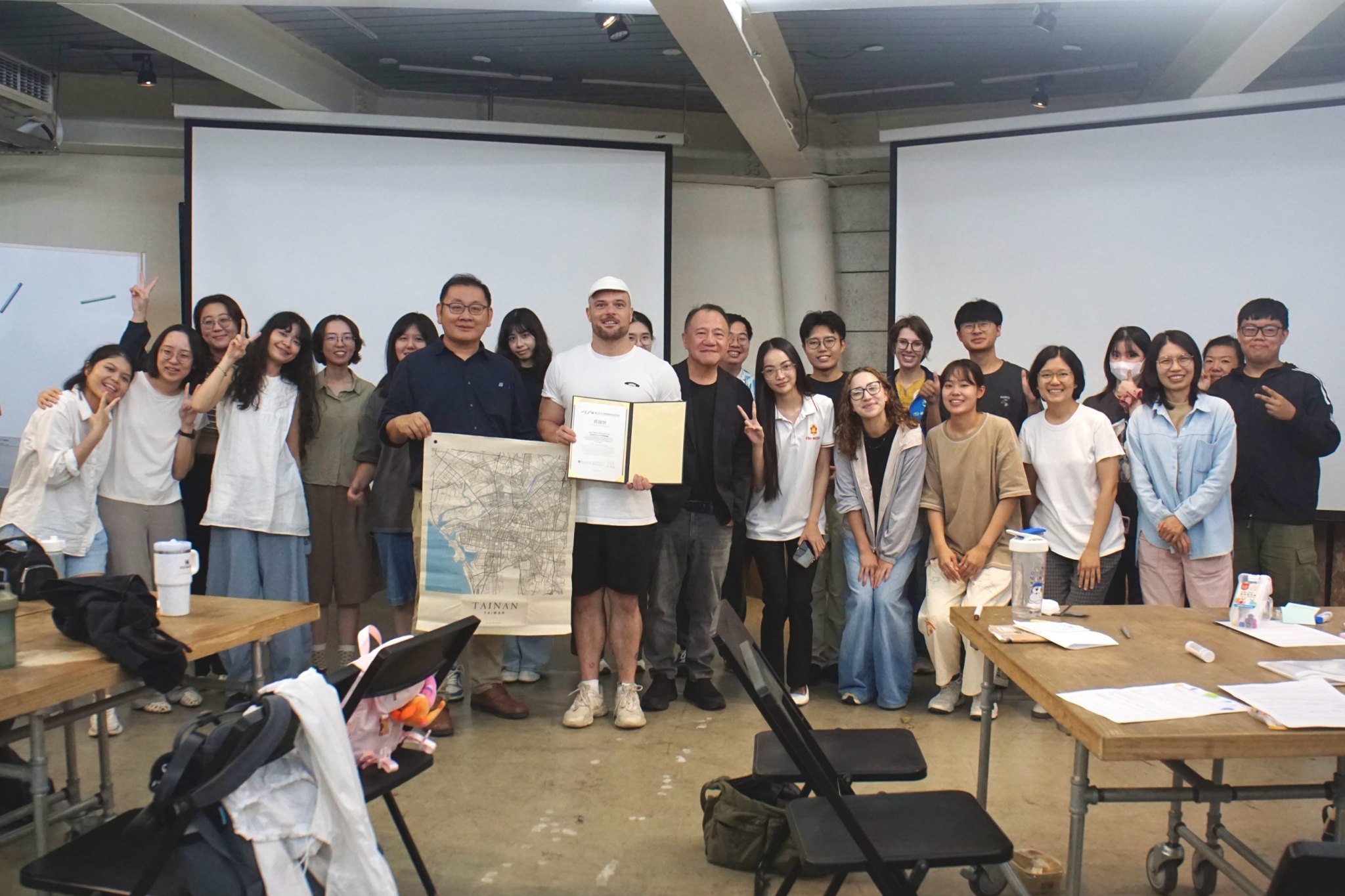
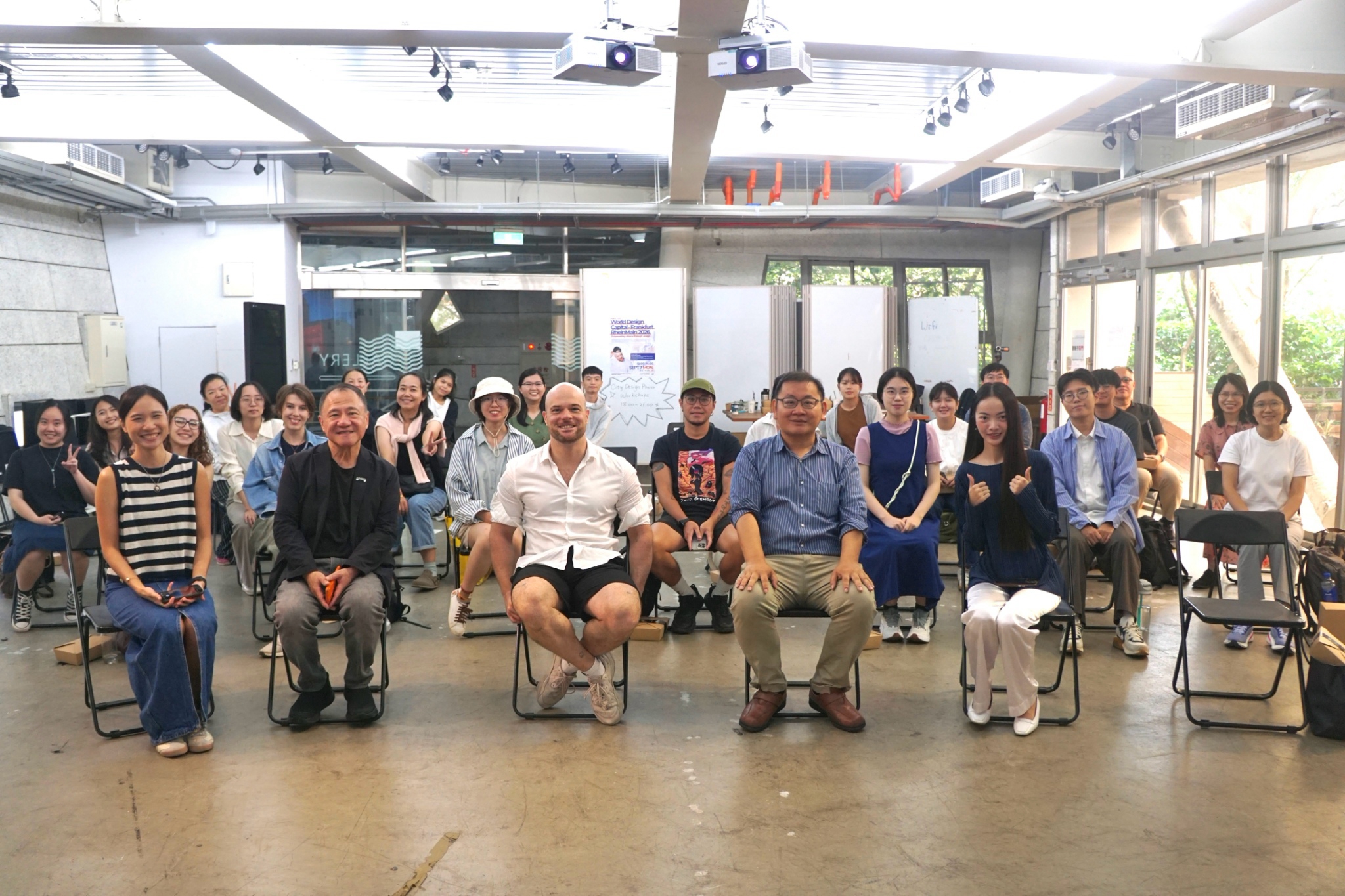
In September 2026, the Institute of Creative Industries Design (ICID) at National Cheng Kung University (NCKU) welcomed Prof. Dr. Felix Kosok, Professor of Communication Design at German International University Berlin and Lead Design Discourse for World Design Capital Frankfurt RheinMain 2026. With his work spanning design, democracy, civic participation, and urban transformation, Kosok brought international experience from WDC Frankfurt RheinMain 2026 into a graduate-level educational setting at NCKU. Through public lectures, workshops, and academic exchange, his visit explored how City Design Power can be understood, identified, and strengthened within the local context of Tainan.
The programme began with the public lecture “World Design Capital Frankfurt RheinMain 2026 – Empowering Citizens through Design.” Drawing on the experience of World Design Capital, Kosok introduced how design can extend beyond shaping the physical environment to strengthen citizens’ capacity to participate, collaborate, and take part in shaping their cities. Rather than asking simply what should be designed in Tainan, the programme focused on a broader question: How can a city build the capacity to act on what it decides?
During the two-day workshop, students—primarily from ICID, with additional participants from Urban Planning and Gerontology—worked with city data, maps, and an ecosystem canvas to examine Tainan as an interconnected urban system. They identified key actors, resources, relationships, existing strengths, and gaps in civic participation and cross-sector collaboration. By looking across different scales, students were encouraged to understand urban challenges not as isolated problems, but as part of wider networks of people, institutions, resources, and relationships.
These observations were then translated into a series of reframed design challenges. Rather than moving immediately toward solutions, students practised identifying how problems are formed, which relationships need to become more visible, and how design might facilitate dialogue and collective action. The process expanded the role of the designer from a provider of solutions to someone who can connect perspectives, navigate complex systems, and create conditions for participation.
Kosok’s workshop also served as the first stage of ICID’s broader international programme, “From Understanding the City to Reimagining the City.” The urban questions and design challenges identified through City Design Power were carried forward into the following Evolutional Creativity programme led by Eisuke Tachikawa. Together, the two programmes created a connected learning journey—from understanding existing urban systems and capacities for action to generating and iterating possible futures.